Will solar keep my lights on during a brownout?
Only if it has a battery. A grid-tied system without storage will not — when BILECO goes down, your inverter shuts down with it. That is not a limitation we chose. Anti-islanding is a safety rule that stops your roof pushing power into a line a lineman is working on. If getting through brownouts is the whole point for you, say so and we will size storage and price it honestly. Anyone who tells you a grid-tied system backs up your house is selling you something.
How much does it cost?
We do not publish a price on this page, because a price set before anyone has seen your roof is a guess, and you would be right not to trust it. What you get instead is one written all-in number after the free survey, covering equipment, installation, permits and paperwork. Nothing gets added to it afterwards, and nothing is due until you approve the design.
How do I know you're not a scam?
Fair question, and the right one to ask. MACC Systems & Engineering Inc. is a Philippine stock corporation registered with the Securities and Exchange Commission on 11 August 2026, Reg. No. 2026080263439-51. Look it up on the SEC's own site rather than taking our word for it. The founders are named on this page with their PRC numbers, every job gets licensed electrician sign-off, and nothing is due until you approve the design. We are early, and we have no customer photos to show you yet. We would rather say that than borrow someone else's.
What happens in a typhoon?
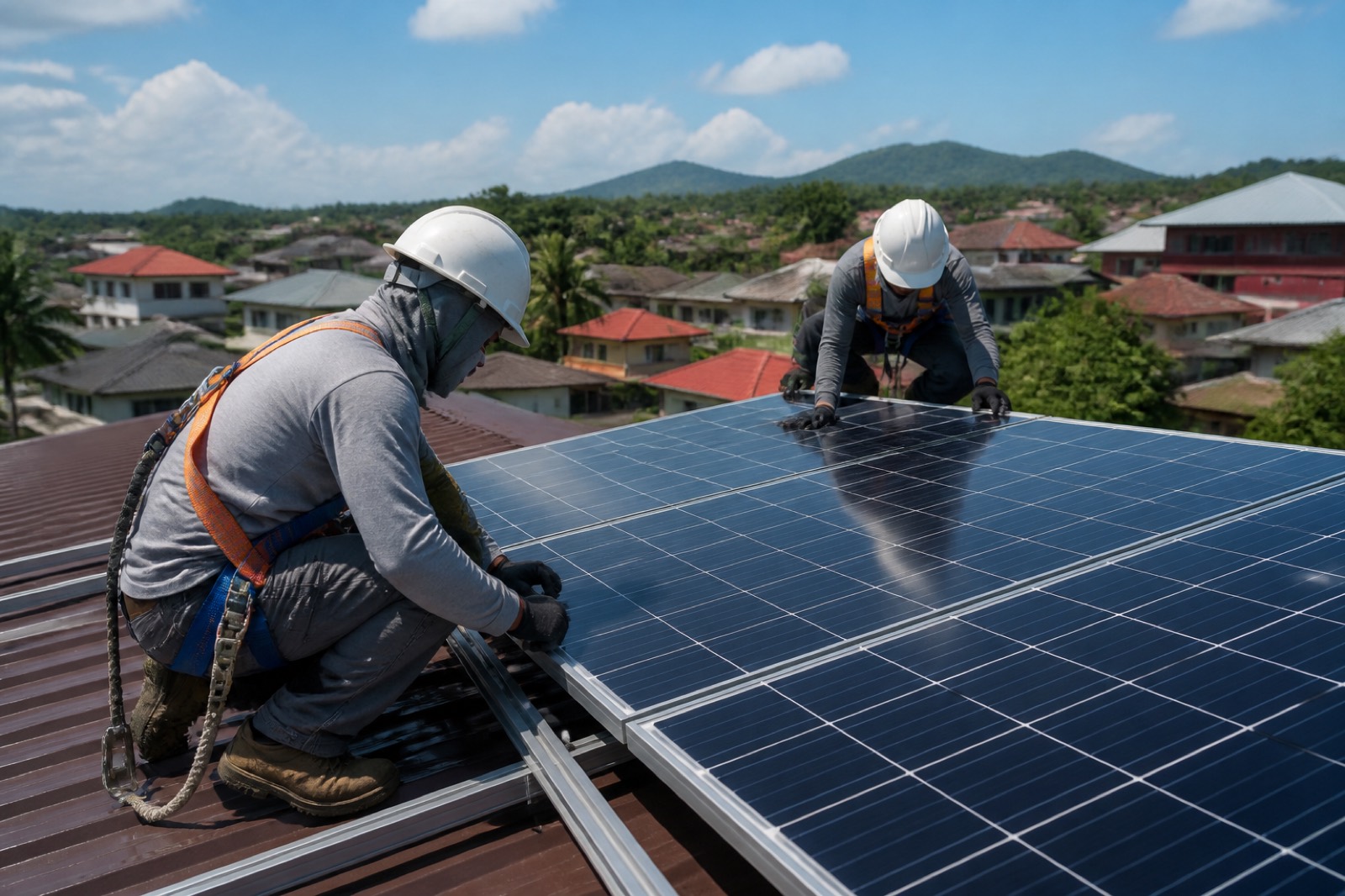
Mounting is the part that matters. Rails land on rafters rather than sheet metal, clamps are torqued to spec, and every roof penetration is flashed and sealed. We would rather quote a smaller array anchored properly than a bigger one that becomes a sail.
Do you handle the permits?
Yes. The electrical permit and the paperwork for your connection are part of the job, not an extra line. You should not have to project-manage your own build. Ask us about exporting surplus back to BILECO and we will tell you exactly where that stands rather than guess at it.
Can I pay monthly?
Tick the installment box on the form and we will lay out what is realistically available to you. We would rather tell you honestly what the options cost than pretend financing is free.
How long have you been doing this?
MACC was registered in August 2026, so as a company we are new, and you should weigh that. What is not new is the people: a Registered Electrical Engineer with twelve years of project and site supervision, and three others running a registered software firm and its support desk. We are building a track record on this island one roof at a time, and we would rather be honest about where we are in that than invent a history.